Seasonal Picks
Leaf Mulch or Compost: What Should You Do With Fall Leaves?
First published
Decide where the leaves belong before collecting every one of them. Healthy leaves may stay in suitable planted beds, be managed on a lawn or go to compost; diseased material needs a separate decision. A collection tarp helps move leaves but does not choose their destination for you.
Start with the part of the yard you are clearing
A perennial bed and a lawn do not need identical fall cleanup. Iowa State Extension’s fall-leaf guidance describes leaving appropriate material in beds while managing heavy leaf coverage on turf. It also explains that collected leaves can be relocated as mulch or sent to compost. Choose the destination first so you are not carrying the same pile around the yard twice.
Separate the material that needs different handling
Do not automatically mix leaves from visibly diseased plants into a healthy pile. Iowa State cautions that typical home compost piles may not kill pathogens or pests. Check local extension advice for the affected plant and your municipal collection rules. The table below is a planning aid, not a diagnosis or a one-size-fits-all disposal instruction. Avoid piling material over plant crowns simply because you have excess leaves.
| Starting point | Decision to make | Avoid |
|---|---|---|
| Healthy planted bed | Can suitable leaf cover remain? | Clearing every bed automatically |
| Lawn with heavy coverage | Manage leaves so turf is not buried | Treating a thick layer as harmless by default |
| Healthy leaves being collected | Mulch destination or accepted compost route | Moving the same pile repeatedly |
| Suspect diseased debris | Plant-specific disposal guidance | Mixing it into ordinary home compost without checking |
Use the tarp for collection, not as a compost system
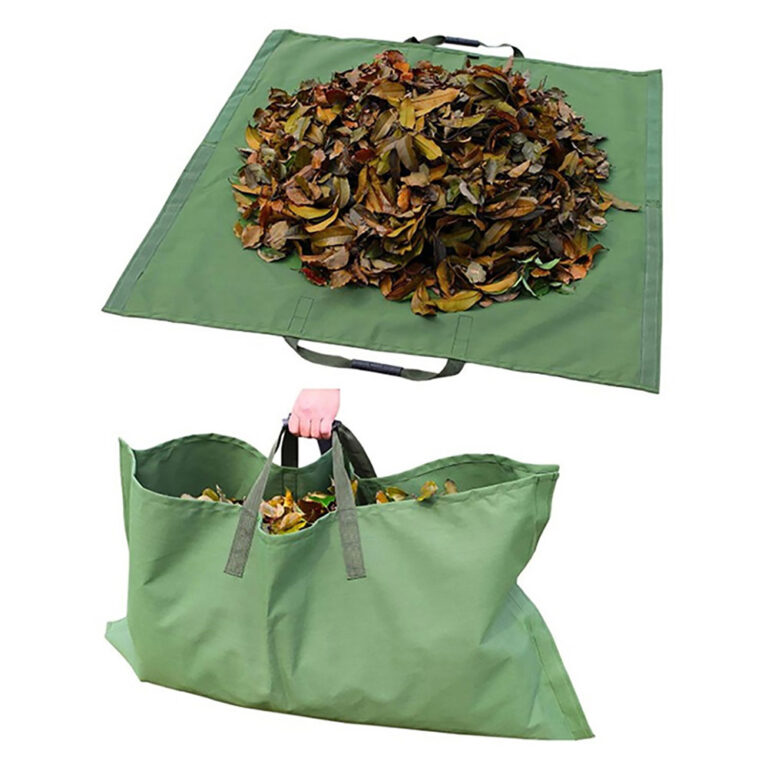
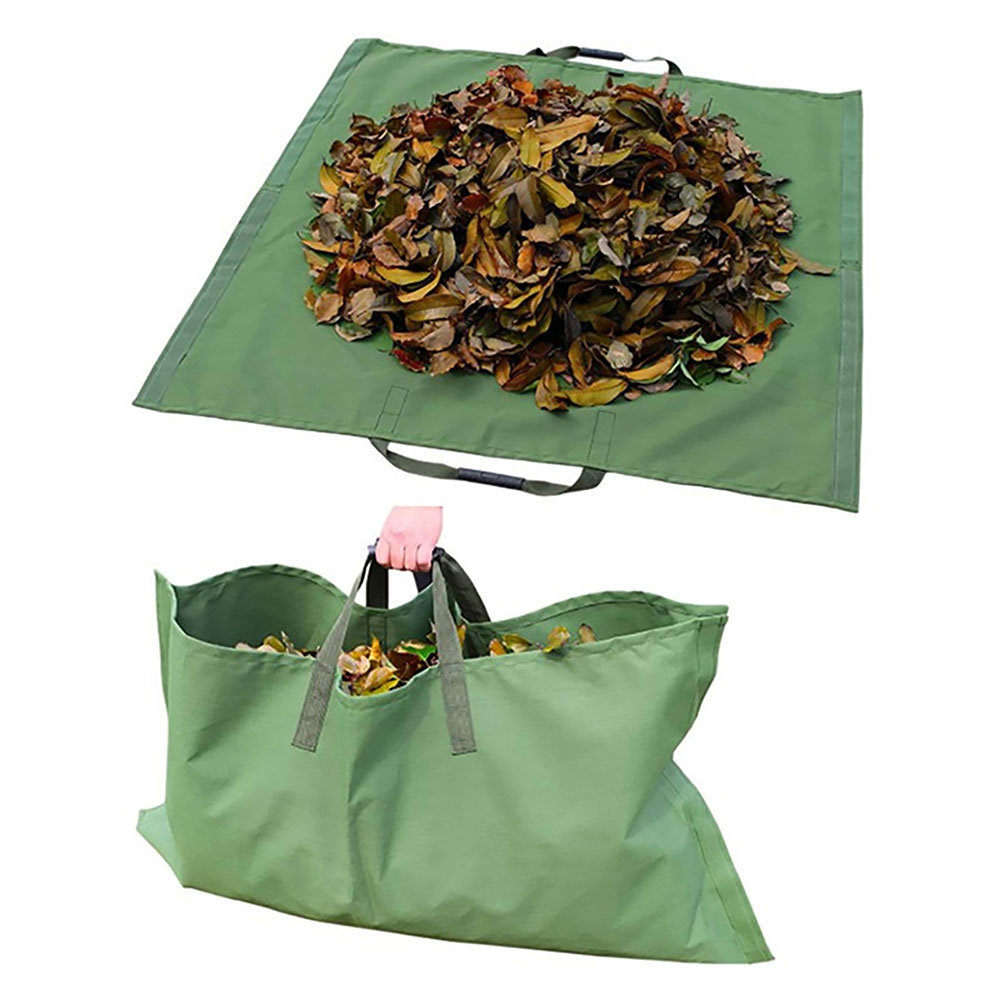
The featured green tarp is listed at 144 × 144 cm laid flat, with handles and hook-and-loop edges that let it form a carrying shape. It is not a compost bin, and the listing does not establish a load rating or a finished-bag volume. Plan modest loads you can handle comfortably; wet leaves can make a bundle much harder to move. Do not derive a safe lifting weight from the tarp’s dimensions.
A simple sequence for one afternoon
Mark the destination of each pile, keep questionable debris separate, then move only the material that needs relocating. If your collection service requires a particular container, confirm that rule before filling anything. Leave the tarp to dry and follow its care directions after use. If the leaves can remain where they are under suitable garden guidance, you may not need a collection purchase at all.
Will the tarp turn leaves into compost?
No. It is a collection and carrying item. Composting requires a separate managed process or an accepted collection destination; no composting performance is claimed for this tarp.
Selections from our collection
One green garden tarp with handles and hook-and-loop edges that close to form a collection bag. Approximately 144 × 144 cm when laid flat. Garden waste and tools are not included.
Convertible Garden Tarp & Leaf Bag — Green
One green garden tarp with handles and hook-and-loop edges that close to form a collection bag. Approximately 144 × 144 cm when laid flat. Garden waste and tools are not included.
Prices shown are current item prices in USD. Check the product and checkout for availability, shipping and the full order total. Styled accessories are included only when the listing says so.
Keep choosing with confidence
Garden tarp or tool tote: carry the material or carry the equipment? covers a related buying decision. Browse seasonal picks for more guidance.