Buying Guides
How to Measure Seed Spacing Before Planting
First published
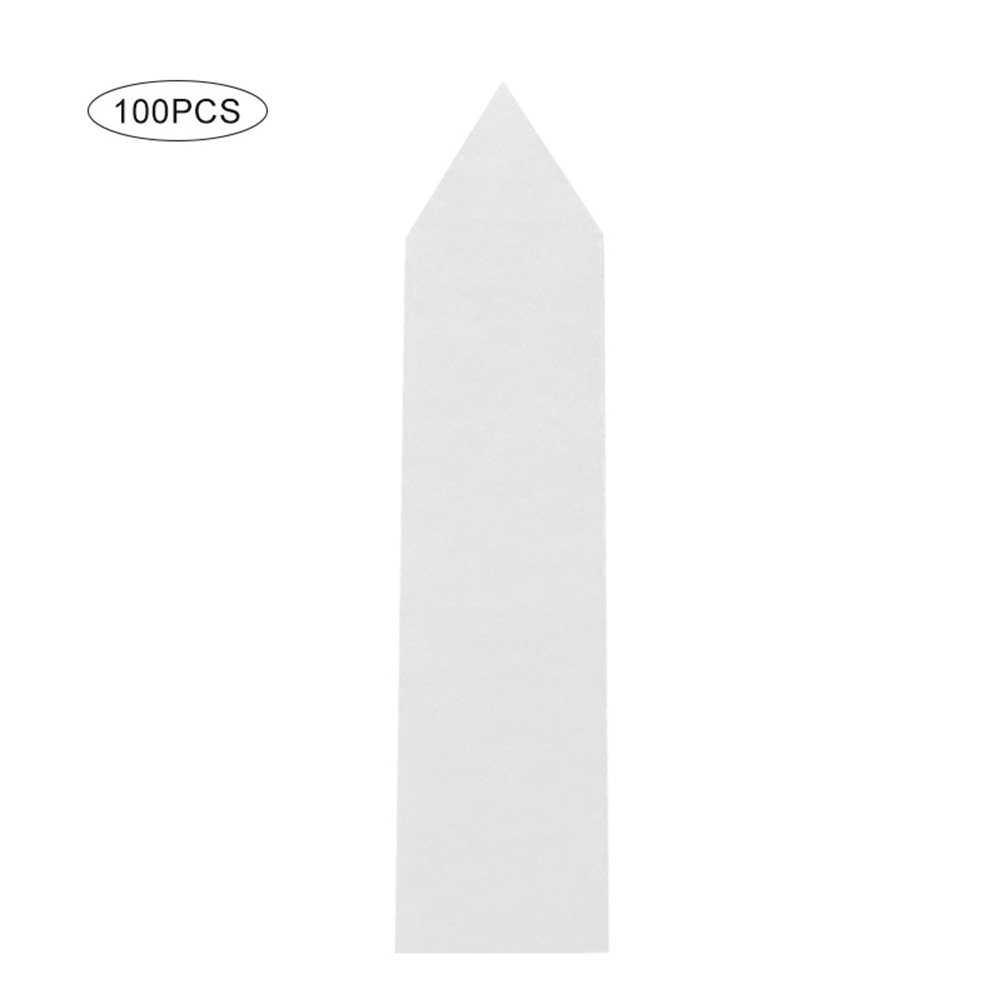
Read the seed packet’s sowing distance, final plant spacing and row spacing separately. Measure the actual planting area with a suitable ruler or tape, then mark positions using the packet’s directions. A plant label identifies the crop; it is not a calibrated spacing tool.
Separate three different measurements
Seed depth tells you how far below the surface to sow. Plant spacing describes separation along the row, sometimes after thinning. Row spacing describes the gap between rows. Do not substitute one for another. University of Maine Extension’s propagation guide explains seed-starting methods; the directions for your particular variety should supply the distances used in your layout.
Calculate positions, not just divisions
Here is a hypothetical geometry example, not a recommendation for any crop: on a 120 cm strip, leave 10 cm at each end and use 20 cm between positions. The available span is 100 cm. Five intervals fit, producing six positions at 10, 30, 50, 70, 90 and 110 cm. Dividing 120 by 20 without deciding where the first and last plants sit hides the edge assumption.
| Input | Example only | Use your own value |
|---|---|---|
| Total strip length | 120 cm | Measured usable planting area |
| End allowance | 10 cm each end | Crop and layout requirement |
| Distance between positions | 20 cm | Packet’s relevant spacing |
| Result | 6 positions, 5 gaps | Check the first and last marks |
Keep the packet and the markers connected
The listed pack contains one hundred white plastic labels, approximately 5 × 1 cm each. Use a short crop code on the narrow label and record the variety, sowing date and packet instructions elsewhere. A marker is not included. Test your chosen writing tool on one label. Do not assume the label’s approximate five-centimeter length is accurate enough to use as a measuring gauge.
Leave room for later decisions
Record which measurement is the initial sowing distance and which is the eventual spacing after thinning. If your packet leaves something unclear, consult its supplier or local Extension guidance before planting. Mark the boundary of paths separately so the layout does not quietly consume walking space. Keep this measured plan with your seed records so a later planting can follow the same assumptions.
Can I use one label per seed to space a row?
Only if you still measure the positions independently. Labels are identifiers, not standardized planting spacers. Many crops also require different initial and final spacing.
Selections from our collection
One hundred white plant labels, approximately 5 × 1 cm each, for marking pots and seedlings. Marker pen and plants are not included.
Plastic Plant Labels — White, Pack of 100
One hundred white plant labels, approximately 5 × 1 cm each, for marking pots and seedlings. Marker pen and plants are not included.
Prices shown are current item prices in USD. Check the product and checkout for availability, shipping and the full order total. Styled accessories are included only when the listing says so.
Related reading
How to Set Up a Repotting Area Indoors Browse buying guides for more guidance.